When people think about weight loss surgery, they often picture changes on the outside. Clothes fitting better, more energy or increased confidence. What many do not realise is that bariatric surgery can create powerful changes on the inside too, especially when it comes to long term health and cancer risk.
At Blackrock WeightCare, we see bariatric surgery not simply as a tool for weight loss, but as a powerful medical treatment that can help transform a person’s internal physiology. One of the biggest ways it does this is by reducing visceral fat, the deeper, more harmful fat that surrounds the organs.
Understanding why visceral fat matters can help explain why people who undergo significant, sustained weight loss after bariatric surgery often see a reduction in cancer risk over the years that follow.
What Is Visceral Fat and Why Is It Harmful
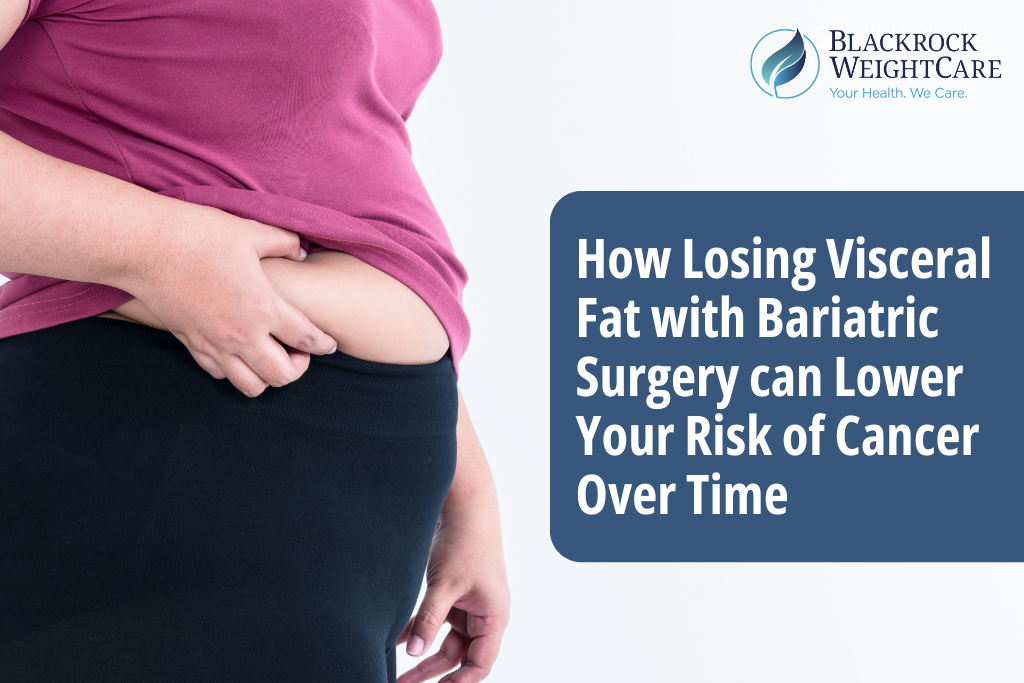
Visceral fat is the fat stored deep inside the abdomen around the liver, pancreas, stomach and intestines. Unlike the fat you can pinch on the outside, visceral fat is biologically active. It releases inflammatory chemicals and hormones that disrupt normal metabolic processes.
High levels of visceral fat are strongly linked to:
- Type 2 diabetes
- Heart disease
- Fatty liver disease
- Hormonal imbalance
- Chronic inflammation
- Increased cancer risk
Even people who do not appear visibly overweight can have dangerously high visceral fat.
How Visceral Fat Increases Cancer Risk
Research has consistently shown that visceral fat contributes to the development and progression of certain cancers. It does this through several mechanisms:
Chronic inflammation
Visceral fat produces inflammatory chemicals that create an environment in the body where cancer cells are more likely to develop and grow.
Hormonal disruption
Visceral fat increases oestrogen levels, which is linked to breast, uterine and ovarian cancers.
It also worsens insulin resistance, which raises insulin and IGF-1 levels – hormones associated with cancer growth.
Immune system stress
Inflammation and metabolic dysfunction weaken the body’s ability to detect and destroy abnormal cells.
Fatty liver disease
Visceral fat plays a major role in non-alcoholic fatty liver disease, which increases the risk of liver cancer.
When combined, these factors create a biological environment that significantly raises cancer risk over time.
How Bariatric Surgery Helps Reduce Visceral Fat
One of the most powerful aspects of bariatric surgery is the speed and consistency with which it reduces visceral fat. The changes begin within weeks. Studies show that patients can lose up to one third of their visceral fat in the first few months after surgery.
This reduction happens because bariatric surgery changes how the body uses energy. It improves insulin sensitivity, lowers inflammation and resets hunger and fullness signals. The body begins to burn harmful internal fat long before visible weight loss is complete.
These internal changes are a key reason why many patients experience major improvements in their health even before they reach their goal weight.
How Bariatric Surgery Lowers Cancer Risk Over Time
The long term health benefits of bariatric surgery continue to build over years. Some of the most important changes include:
Lower inflammation
As visceral fat decreases, inflammation levels fall. This leads to healthier tissues and a reduced chance of abnormal cell growth.
Better hormone balance
When hormones such as oestrogen and insulin return to healthier levels, the body becomes less prone to developing hormone related cancers.
Improved liver health
A healthier liver significantly reduces the risk of liver cancer.
Stronger immune function
When inflammation decreases and metabolic health improves, the immune system becomes more effective.
More stable long-term weight
Maintaining a lower weight helps prevent the return of visceral fat and the problems that come with it.
These improvements do not happen overnight, but they continue to strengthen year after year.
Cancers Most Affected by Visceral Fat Reduction
Research suggests that bariatric surgery can reduce the risk of several cancers, including:
Breast cancer
Endometrial cancer
Colon cancer
Oesophageal cancer
Kidney cancer
Liver cancer
Pancreatic cancer
Women may experience particular benefit because of the strong link between visceral fat, oestrogen levels and hormone related cancers.
How We Support You at Blackrock WeightCare
Weight loss surgery is only one part of your journey. Our team includes surgeon, dietitians, specialist nurses, psychologists, physiotherapists and endocrinologists who work together to help you rebuild your health from the inside out.
We support you through each stage, helping you maintain lower visceral fat levels, improve your diet and movement and protect your long term wellbeing.
Our aim is to give you a future where your health feels stronger, your risks are lower, and your life feels more open and free.
When you feel ready to explore the next step in your health journey, we are here to support you. If visceral fat, long-term health or the risks linked to obesity are weighing on your mind, you are very welcome to reach out for guidance or to arrange an initial consultation. You can contact Blackrock WeightCare on 01 255 2479. You deserve a future where your body feels lighter and stronger and where life feels a little more open again. We would be glad to walk that journey with you whenever the time is right.
Your Health. We Care.