Robotic SADI-S – Single Anastomosis Duodenoileal Bypass – Sleeve

At Blackrock WeightCare we perform a SADI-S (Single Anastomosis Duodeno-Ileal bypass- with Sleeve) procedure. It provides at least the same weight loss compared to all other weight loss surgical procedures.

SADI-S also seems to have the longest-lasting effect, with less late weight regain. Weight regain is becoming noticeable in patients who have had sleeve gastrectomy in the past.

Ideal patient:

  • BMI over 50
  • Diabetes/high cholesterol/metabolic complications of obesity
  • Failure of previous sleeve gastrectomy
  • Weight regain after sleeve gastrectomy

Robotic SADI Overview

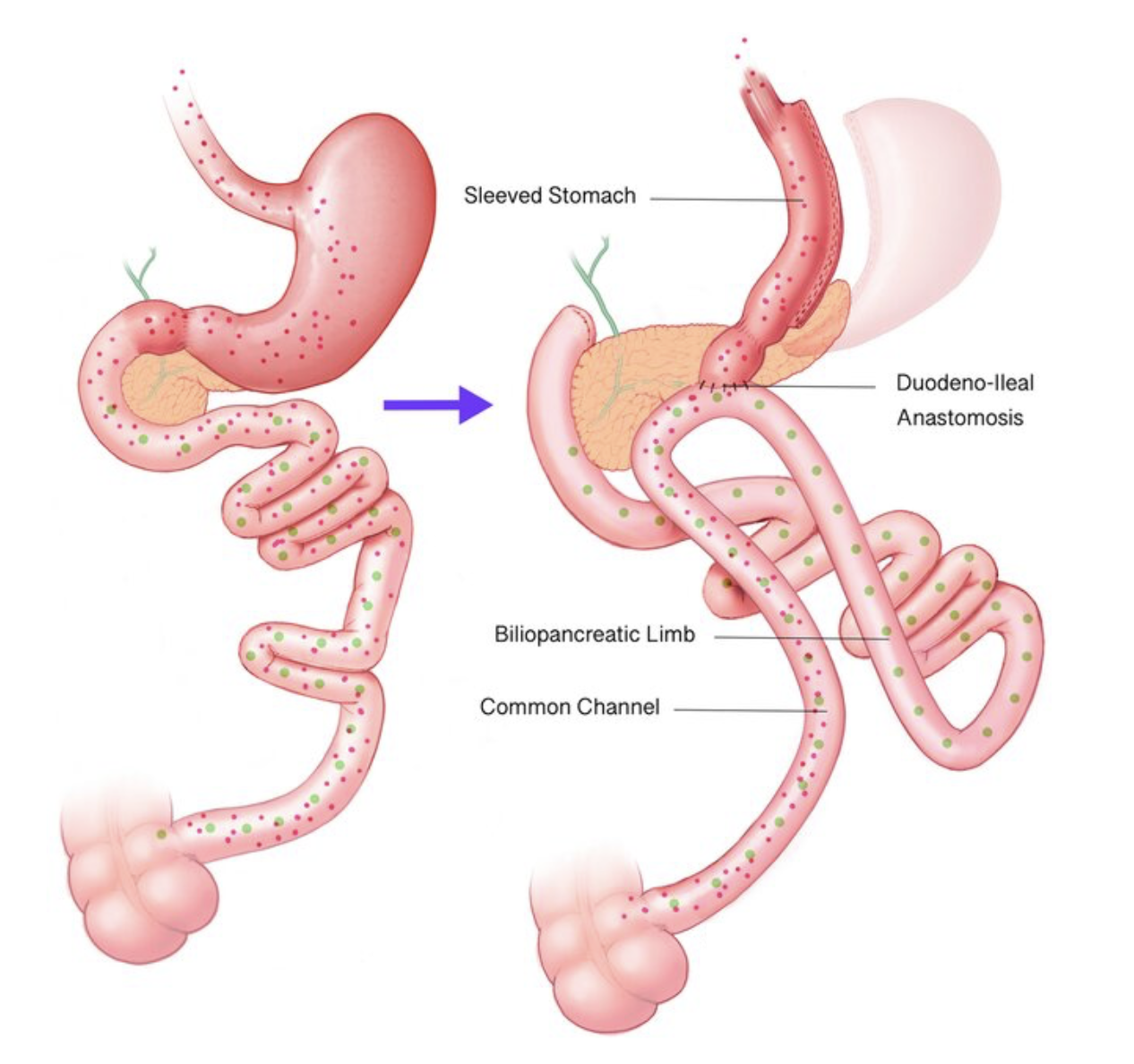
The SADI procedure is an operation incorporating a sleeve gastrectomy PLUS bypassing part of the intestine.

It probably provides the most dramatic weight loss relative of all the currently performed procedures with no apparent increase in side effects. SADI-S also has the greatest effect on improving medical disorders associated with obesity such as diabetes. As such it is generally reserved for patients with a very high BMI (BMI>45) or those with significant medical complications due to obesity.

At Blackrock WeightCare, William Robb performs the SADI-S by robotic surgery. This makes the trickier parts of the surgery much more straight forward and in our hands we believe robotic surgery adds to patient safety.

Quick guide

How is the Robotic SADI procedure performed?

Firstly, a sleeve gastrectomy-type procedure is performed and the excess stomach is removed.

Secondly, the first part of the intestine (duodenum) is divided just beyond the exit valve (pylorus) of the stomach and this is joined to a loop of intestine about 2.5-3 metres from the end of the small intestine. The operation decreases appetite, restricts meal size and bypasses the length of the small intestine resulting in beneficial hormonal changes which have a positive influence on the body’s metabolism.

Mechanically this operation has several advantages over a traditional roux-en-y gastric bypass (RYGB). The pyloric valve (exit valve of the stomach) is preserved – unlike in the gastric bypass or one anastomosis (mini) gastric bypass. This exit valve of the stomach (pylorus) has an important role in regulating the rate at which food & acid enters the intestine from the stomach. It also prevents bile from refluxing back into the stomach from the duodenum which can cause significant reflux symptoms.

The preservation of the stomach’s exit valve in this operation usually eliminates dumping syndrome which can occur with standard gastric bypass procedures. Glucose fluctuations after a meal do not occur to the same extent and the risk of episodes of hypoglycaemia is reduced. There is also a reduction in the formation of ulcers at the anastomosis site.

Similar to a RY-Gastric Bypass, a SADI-S bypasses part of the small intestine so there is some potential for patients to develop deficiencies in vitamins, minerals, protein & trace elements similar to gastric bypass. Therefore it is important for patients to maintain ongoing surveillance and annual blood tests.

Your Health – We Care. Blackrock WeightCare follows up with all patients for a minimum of 2 years to ensure that any risk is minimised and we help teach you how to self-care in the years ahead. Read more about our Weight Loss Aftercare here.

SADI following sleeve gastrectomy – revisional surgery

The procedure is becoming increasingly useful for patients who have had a prior sleeve gastrectomy and;

  1. Have not had as much weight loss as expected, or,
  2. Have regained weight later on.


In the past these patients have often had their sleeve gastrectomy converted to a standard gastric bypass, however, evidence shows that this also may not provide as much further weight loss as desired or robust long-term weight loss.

The SADI procedure is showing extremely promising results after a previously failed sleeve gastrectomy.

In Summary

The SADI procedure has been developed to provide excellent weight loss, the longest-lasting weight loss, and the most beneficial effect on medical problems associated with obesity, compared to all other procedures.

Robotic SADI-S – Single Anastomosis Duodenoileal Bypass – Sleeve Enquiries

Submit the form below and we will be in touch soon to take you through the next steps and start your weight loss journey with Blackrock WeightCare

    Frequently Asked Questions

    It is a two-step operation: a sleeve gastrectomy to reduce stomach size, followed by a single connection between the duodenum and the lower small bowel, all performed with the da Vinci robot for added precision and control.

    People with a BMI over 50 or a BMI ≥ 45 plus conditions like diabetes, high cholesterol or failed sleeve gastrectomy results.

    Yes – hormonal changes from the intestinal bypass give SADI-S the strongest track record for rapid diabetes and cholesterol control among current surgeries.

    Robot-assisted instruments give the surgeon a steadier 3-D view and finer movement, making complex duodenal suturing easier. Dexterity, precision and control. Robotic surgery has been a game changer for high BMI patients.

    Yes!  .. converting a sleeve to SADI-S is proving highly effective for extra weight loss and long-term maintenance. It is the ideal operation for patients who have regained weight after a sleeve operation. Revisional surgery may also be covered under your health insurance.

    Yes – once medical criteria are met, Irish private insurers – including Vhi Healthcare, Laya Healthcare, Level Health, Irish Life and Garda Medical Aid Society – will authorise cover for SADI-S. We take care of the entire pre-authorisation documentation on your behalf.

    Most patients spend two nights in hospital and return to desk work after two weeks, with full activity by six weeks, subject to surgical advice.

    A referral helps but isn’t essential. You can ask your GP to send one, or simply fill out the enquiry form here; the team at Blackrock WeightCare will check your clinical eligibility and insurance cover for you.

    A brief spell of hair thinning is common around the third month, but it settles once weight stabilises. Meeting the daily protein target, following the personalised guidance from our dietitian and endocrinologist, and keeping up with scheduled blood tests and reviews will protect both your hair and your lean muscle mass.

    Gentle walking starts day one; light cardio at two weeks; weights and core work from six weeks with surgeon clearance.

    Yes. We recommend waiting 18 months – until your weight and vitamin levels have settled – before trying to conceive. When you’re ready, let both our bariatric team and your obstetrician know so your supplements and blood tests can be adjusted for a healthy pregnancy.

    Patients typically lose 20 – 30% of their starting weight in the first three months and 70 – 85% of excess weight by 12-18 months, with a slow taper towards their “new normal” after two years.

    It may do. Reflux may worsen in some patients, and in other patients, symptoms settle because the pyloric valve is preserved and bile cannot flow back into the stomach. If you already have Barrett’s oesophagus, we will review your endoscopy before making a final plan.

    The answer is yes.  Most patients see a marked drop in apnoea episodes and cholesterol levels within six months, often allowing reduction or discontinuation of CPAP and statins.

    Yes. Blackrock WeightCare welcomes patients from Northern Ireland and the UK for SADI-S in Ireland. We begin with virtual consultations, share pre and post-operative blood-test plans with your local GP, and map travel around your personal recovery; your surgeon will advise the safest time for you to head home after surgery.

    Go Surgical Limited
    Suite 9, Blackrock Clinic, Rock Road, Blackrock, Dublin, A94 E4X7