
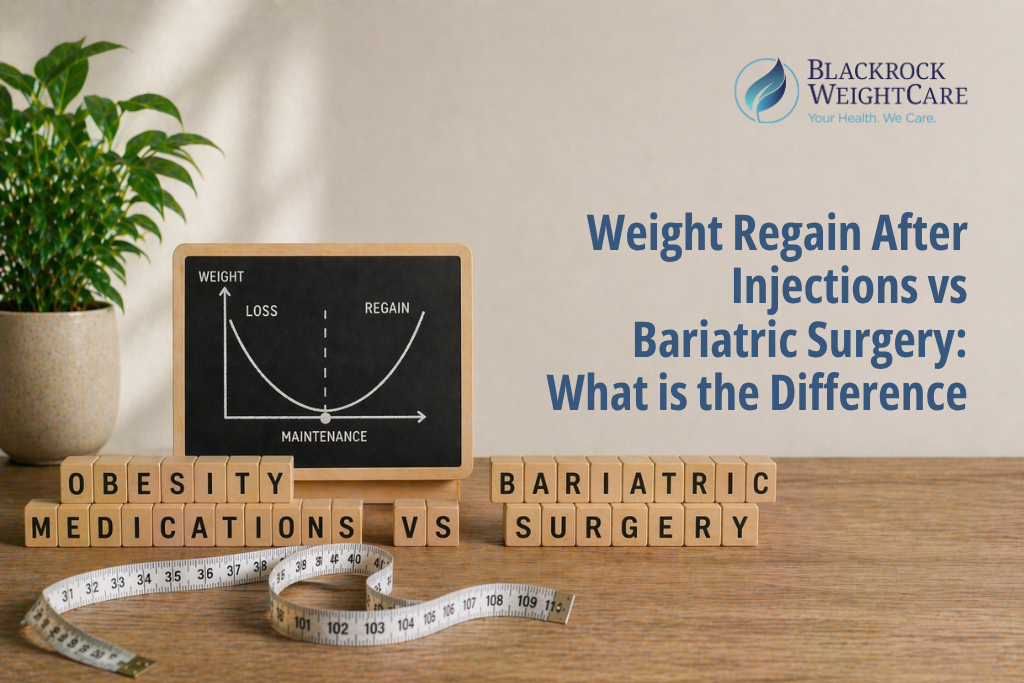
Weight regain is one of the biggest fears people have when starting any form of obesity treatment. Whether it is weight loss injections or bariatric surgery, the same question comes up again and again.
Will the weight come back?
The honest answer is that weight regain can happen with both treatments. The difference lies in why it happens, how common it is, and how it is managed.
Understanding that difference matters before choosing your next step.
Why Weight Regain Happens After Injections
Medications such as Mounjaro and Ozempic work by regulating appetite hormones and slowing stomach emptying. While you are taking them, appetite is reduced and calorie intake falls.
The challenge is what happens when the medication stops.
These injections do not permanently change the anatomy of the digestive system. Once the medication is withdrawn:
- Appetite hormones gradually return to baseline
- Hunger increases
- Calorie intake rises
- Weight regain can occur
Clinical studies have shown that a significant proportion of weight lost on GLP-1 medications may be regained after stopping treatment if no structured long-term plan is in place.
This means injections need to be continued long term to maintain results. Medication is a lifelong treatment for a chronic disease. That carries a commitment to continuing the medications with clear cost implications and requires ongoing medical supervision.
Why Weight Regain Happens After Bariatric Surgery
Weight regain after surgery is different.
Procedures such as Gastric Sleeve and SADI-S permanently alter stomach size and, in some cases, nutrient absorption. They also create long-lasting hormonal changes that reduce hunger and improve insulin sensitivity.
However, surgery is not immune to weight regain.
Reasons may include:
- Gradual adaptation of the stomach over time
- High-calorie liquid intake
- Grazing behaviour
- Emotional eating
- Reduced follow-up engagement
- Lack of dietary structure
The key difference is that the anatomical and hormonal changes from surgery remain in place. This makes weight regain generally slower and often less dramatic than after stopping injections.
In most cases, surgery provides more durable long-term weight loss, particularly in patients with BMI over 45.
How Much Weight Regain Is Normal
After bariatric surgery, small amounts of weight regain several years later can be normal. The body stabilises after the initial weight loss phase. The goal is not zero regain. The goal is maintaining significant net weight loss and improvement in health.
After stopping injections, weight regain can be more rapid because the hormonal effect is removed entirely.
The pattern is different. The underlying biology explains why.
Which Offers More Durable Results
For patients with severe obesity, especially BMI above 40, bariatric surgery consistently shows stronger and more durable long-term outcomes compared to injections alone.
Injections can be effective for moderate obesity. They are valuable tools. But they do not currently match the long-term metabolic impact of surgery in higher BMI groups. That does not mean injections have no role. In some patients, they are appropriate as:
- A primary treatment
- A bridge before surgery
- Support in cases of mild post-surgical regain
For many patients the treatment of their obesity may involve both – often surgery now and medication later if ever required.
The decision depends on the individual.
What Happens if Weight Regain Occurs
At Blackrock WeightCare, weight regain is managed proactively.
This may include:
- Nutritional review
- Behavioural support
- Medical optimisation
- Use of medication where appropriate
- Consideration of revisional surgery in selected cases
Mr William Robb assesses each situation carefully. As an Upper GI and Robotic Bariatric Surgeon, he evaluates anatomical, metabolic and behavioural factors before recommending next steps.
The focus is always on long-term health, not short-term numbers.
The Bigger Question
The real question is not whether weight regain is possible. It is which treatment offers the most sustainable control of a chronic disease.
Obesity is a long term chronic disease. It requires a long-term plan and an ever evolving algorithm of care.
Injections require ongoing use to maintain effect. Surgery creates permanent anatomical and hormonal changes that support durability, particularly in higher BMI patients.
Neither is a quick fix. Both require commitment and follow-up.
Choosing the Right Path
If you are concerned about weight regain, whether after injections or surgery, the right step is expert assessment before making changes.
At Blackrock WeightCare, complex and high BMI patients are routinely assessed to determine the safest and most effective long-term strategy.
To know more, click here and fill the enquiry form or speak directly with our team on 01 255 2479.
Your Health. We Care.